In the corporate world, our clothing is often considered our “armor.” We select blazers for authority, crisp shirts for precision, and tailored trousers for professionalism. However, in 2026, the definition of a high-performance wardrobe has evolved. It is no longer enough for a garment to look professional; it must also be biologically and environmentally “clean.”
As we spend 40+ hours a week in our office attire, the textiles we choose have a direct impact on our health and the planet. Traditional professional wear is often a cocktail of hidden chemicals. A non-toxic capsule wardrobe is the ultimate “quiet luxury”—an investment in high-quality, safe materials that protect your skin, your endocrine system, and the ecosystem.
The Hidden Toxins in Your Workwear
Most conventional office wear is engineered for convenience, not health. To achieve “performance” features, manufacturers often apply chemical finishes that remain in the fabric for the life of the garment.
1. PFAS (The “Forever Chemicals”)
If your trousers are “stain-resistant” or your trench coat is “water-repellent,” they are likely treated with PFAS. These chemicals are linked to hormonal disruption and immune system suppression. Because they do not break down, they accumulate in your body and the water supply.
2. Formaldehyde
That “wrinkle-free” or “easy-care” crisp white button-down often achieves its stiffness through formaldehyde resins. This is a known carcinogen and a frequent cause of contact dermatitis and respiratory irritation for those working in office environments with poor ventilation.
3. Azo Dyes and Antimony
Vibrant synthetic dyes often contain heavy metals and azo compounds, some of which can be absorbed through the skin when you sweat. Additionally, polyester (a plastic-based fabric) often contains antimony, a stabilizer used in the manufacturing process that mimics the toxicity of arsenic.
The Non-Toxic Fabric Hierarchy
Building a sustainable capsule begins with selecting fibers that are naturally high-performing without the need for chemical intervention.
| Fiber | Why It’s Non-Toxic | Professional Edge |
| Organic Wool | GOTS-certified (no toxic sheep dips). | Naturally wrinkle-resistant and temperature-regulating. |
| Tencel™ / Lyocell | Closed-loop cellulose; no harsh solvents. | Exceptional drape; feels like silk but is machine washable. |
| European Flax Linen | Requires few pesticides; naturally carbon-sequestering. | The gold standard for summer professional breathability. |
| Organic Silk | No synthetic pesticides used on mulberry leaves. | Natural luster and hypoallergenic properties for sensitive skin. |
The 12-Piece Non-Toxic Capsule Blueprint
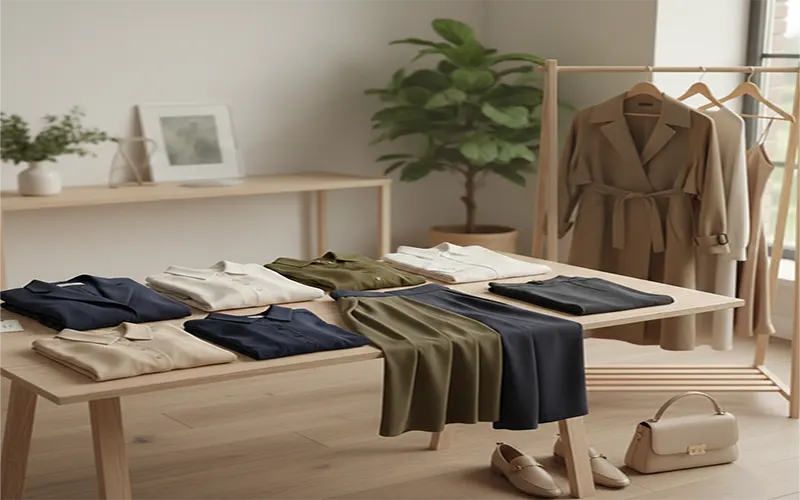
The goal of a capsule wardrobe is to maximize outfitting potential while minimizing waste. These 12 pieces are designed to create over 30 unique looks, taking you from Boardroom Meetings to Casual Fridays.
The Foundation (Tailoring)
- 1. The Signature Blazer (Navy or Charcoal): Opt for GOTS-certified organic wool. Wool is naturally antimicrobial, meaning it requires less frequent cleaning than synthetic blends.
- 2. The Relaxed Blazer (Camel or Cream): A Tencel-linen blend provides a structured yet breathable second layer for a less formal look.
- 3. The Tailored Trouser: A high-waisted, wide-leg wool trouser that pairs perfectly with both blazers.
The Essentials (Tops)
- 4. The “Crisp” Organic Cotton Poplin Shirt: Look for “un-treated” cotton. It may require a quick steam, but it keeps your skin free from formaldehyde.
- 5. The Silk or Tencel Blouse: A neutral-toned draped top for layering under blazers.
- 6. The Fine-Gauge Knit: A lightweight organic cotton or cashmere sweater for transitional weather.
The Versatiles
- 7. The Structured Midi Dress: A sheath or wrap dress in a heavy Tencel twill.
- 8. The Column Skirt: An organic silk or wool pencil skirt.
- 9. The Perfect White Tee: Heavyweight organic cotton to wear under a blazer for “Power-Casual” days.
Footwear & Accessories
- 10. The Chrome-Free Loafer: Traditional leather tanning uses trivalent chromium. Seek out “Chrome-Free” or vegetable-tanned leathers to avoid heavy metal exposure.
- 11. The Classic Pointed Flat: Look for brands using recycled ocean plastics or FSC-certified natural rubber soles.
- 12. The Reversible Leather Belt: Vegetable-tanned leather in black/brown to tie the silhouettes together.
Brand Spotlight: The 2026 Leaders
When shopping for your capsule, look for certifications like GOTS (Global Organic Textile Standard) and OEKO-TEX Standard 100, which test for harmful substances.
- Another Tomorrow: A leader in “Luxury Sustainability.” They provide a digital passport for every garment, tracing the wool back to the specific farm.
- Eileen Fisher: The pioneer of the “System” dressing. Their commitment to circularity and non-toxic dyes is unmatched in the industry.
- ASKET: Perfect for the “Permanent Wardrobe.” They focus on radical transparency and high-quality basics without seasonal trends.
- Maggie Marilyn: For those who want color and flair without the toxic impact; they utilize “Peace Silk” and organic cottons exclusively.
Toxin Red Flag Checklist
When browsing for new additions to your wardrobe, be wary of these marketing terms which often signal chemical treatments:
- [ ] “Non-Iron” or “Wrinkle-Resistant” (Formaldehyde)
- [ ] “Stain-Repellent” or “Easy-Clean” (PFAS)
- [ ] “Anti-Odor” (Often uses silver nanoparticles which can disrupt the skin microbiome)
- [ ] “High-Shine Synthetic” (Phthalates in PVC/Vinyl)
Care and Longevity: The Non-Toxic Way
The most sustainable garment is the one you already own and maintain. Traditional dry cleaning uses Perchloroethylene (“Perc”), a volatile organic compound that is toxic to the liver and kidneys.
- Switch to “Green” Cleaning: Seek out professional cleaners who use CO2 cleaning or “Wet Cleaning” methods.
- The Power of Steam: Instead of washing after every wear, use a handheld steamer. The heat kills bacteria and refreshes the fibers without the need for water or chemicals.
- Spot Clean: Use a natural castile soap to spot-treat stains immediately rather than submerging the whole garment.
Building a non-toxic professional capsule wardrobe is an act of self-care and environmental advocacy. By rejecting the “disposable” nature of fast-fashion corporate wear and opting for high-quality, biologically safe fibers, you create a wardrobe that supports your career and your health.
When your clothes are free from endocrine-disrupting chemicals and “forever” toxins, you don’t just look the part of a modern leader—you embody the values of one.