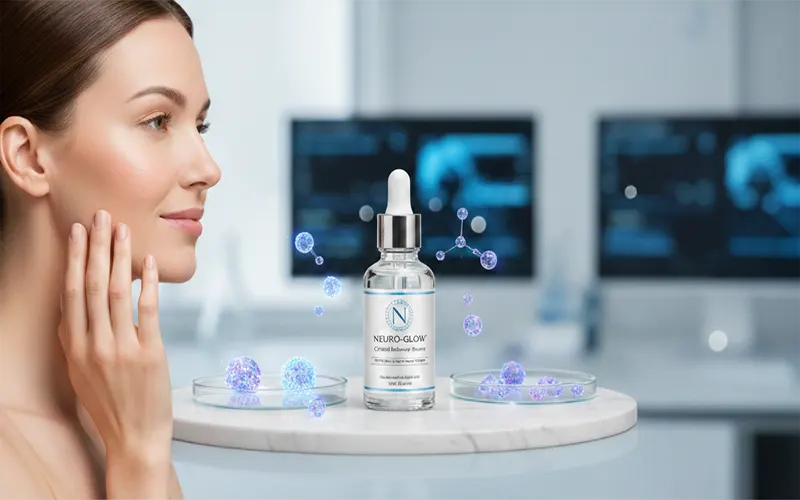
In the modern world, “stressed skin” is more than just a marketing buzzword; it is a physiological reality. For years, we viewed skin dullness as a simple matter of dead cell accumulation or dehydration. However, as the field of neurocosmectics emerges in 2026, we now understand that the radiance of our skin is inextricably linked to our brain.
When you are under chronic stress, your body’s Hypothalamic-Pituitary-Adrenal (HPA) axis is in constant overdrive, flooding your system with cortisol. This “stress hormone” doesn’t just stay in your bloodstream—it interacts directly with your skin cells, dimming your natural “glow” from the inside out. Neurocosmetics are designed to bridge this gap, using ingredients that speak the language of the skin-brain axis to restore cellular resilience.
The Science: How Cortisol Steals Your Glow
The skin is not just an outer shell; it is an immediate extension of the nervous system. It contains sensory neurons that communicate directly with the brain. When the brain perceives stress, the skin responds in kind.
Chronic high cortisol affects the skin in three specific ways:
- Inhibited Synthesis: Cortisol suppresses the production of collagen and hyaluronic acid, leading to a “hollowed” and dehydrated appearance.
- Impaired Barrier Function: High stress levels slow down the production of skin lipids (ceramides), making the skin “leaky” and prone to redness.
- Reduced Microcirculation: Stress triggers vasoconstriction. This reduces the flow of oxygenated blood to the skin’s surface, resulting in that sallow, greyish “urban dullness.”
What Are Neurocosmetics?
Neurocosmetics (or “psychodermatology” in topical form) are ingredients formulated to act on the skin-brain connection. They work by:
- Modulating skin receptors (like TRPV1) to reduce the sensation of stinging or heat.
- Inhibiting the local production of cortisol within the skin cells.
- Stimulating “feel-good” neuropeptides like beta-endorphins to promote healing.
Top Neurocosmetic Ingredients for 2026
1. Topical Adaptogens: Ashwagandha & Rhodiola Rosea
Adaptogens have long been used in ingestible form to help the body manage stress, but their topical application is the new frontier for dullness.
- The Action: They act as “thermostats” for the skin cells. Ashwagandha specifically protects the skin from “screen stress” (blue light) and reduces the oxidative damage caused by cortisol.
- The Result: A reduction in “stress-induced sallowness” and a more even, rested skin tone.
2. Neuropeptide Modulators: Palmitoyl Tripeptide-8
This is a cutting-edge “neuro-calming” peptide designed specifically to prevent and soothe neurogenic inflammation.
- The Action: It works by reducing the release of pro-inflammatory neuropeptides. When your skin is “freaked out” by a lack of sleep or high-pressure deadlines, this peptide tells the nerves to stop sending distress signals.
- The Result: It significantly reduces the persistent redness and “angry” dullness that often accompanies a high-stress lifestyle.
3. Tephrosia Purpurea (Wild Indigo)
Perhaps the most famous neurocosmetic ingredient of 2026, Wild Indigo is a biological breakthrough for tired skin.
- The Action: It stimulates the release of Beta-endorphins (the body’s natural “happiness” molecules) in the skin. Crucially, it has been shown to inhibit the production of cortisol by skin cells themselves.
- The Result: Clinical studies show a visible improvement in skin luminosity and a reduction in “dark circles” and fatigue markers within just two weeks of use.
4. CBD and CBG (The Non-Psychoactive Cannabinoids)
While CBD is well-known, CBG (Cannabigerol) is emerging as the “stem cell” of cannabinoids for skin.
- The Action: The skin is packed with endocannabinoid receptors. CBD/CBG binds to these receptors to stabilize the barrier and lower the “volume” of stress signals.
- The Result: It calms the “puffiness” and inflammatory dullness caused by high cortisol levels.
5. Mitochondrial Boosters: CoQ10 and Niacinamide
Stress drains the energy (ATP) from your skin cells. When cells lack energy, they cannot repair or reflect light.
- The Action: These ingredients act as a “charger” for your cellular mitochondria.
- The Result: Improved cellular turnover and a more reflective, “lit-from-within” surface.
Neurocosmetic Ingredient Summary
| Ingredient | Primary Action | Best For |
| Wild Indigo | Lowers local cortisol; boosts beta-endorphins. | Chronic fatigue & dark circles. |
| Ashwagandha | Neutralizes oxidative stress from cortisol. | Sallow, “urban” skin dullness. |
| Palmitoyl Tripeptide-8 | Calms neurogenic inflammation. | Stressed, reactive, and red skin. |
| Rhodiola Rosea | Enhances cellular oxygen consumption. | Lack of “glow” and low-energy skin. |
The Ritual: Activating the Parasympathetic System
Neurocosmetics work best when the application itself is a “brain-reset.” To maximize the reduction of cortisol:
- Inhalation: Many neurocosmetic formulas are paired with functional scents (like Sandalwood or Bergamot) that lower heart rate upon inhalation.
- Pressure Point Massage: Applying your serum with gentle pressure on the temples and jawline can stimulate the vagus nerve, signaling to the brain that the “threat” is over.
- Temperature Play: Using a chilled stone roller with your neurocosmetic oil can provide a “sensory pivot,” snapping the nervous system out of a loop of overthinking.
Beyond the Bottle: Synergy with Lifestyle
Topical treatments are powerful, but they are most effective when supported by internal habits.
- The 4-7-8 Breath: Use this breathing technique during your evening skincare routine to transition from “Fight or Flight” to “Rest and Digest.”
- Magnesium Supplementation: Often called the “anti-stress mineral,” magnesium supports the skin’s ability to repair itself overnight by balancing systemic cortisol.
Investing in Cellular Resilience
Dullness is the skin’s way of saying it is tired of fighting. By incorporating neurocosmetic ingredients like Wild Indigo, Adaptogens, and Neuropeptides, you aren’t just “covering up” a lack of sleep—you are intervening in the biological pathway of stress.
In 2026, the ultimate skincare goal is no longer just “perfection,” but resilience. When you lower the impact of cortisol on your skin, you allow its natural, vibrant light to return.