
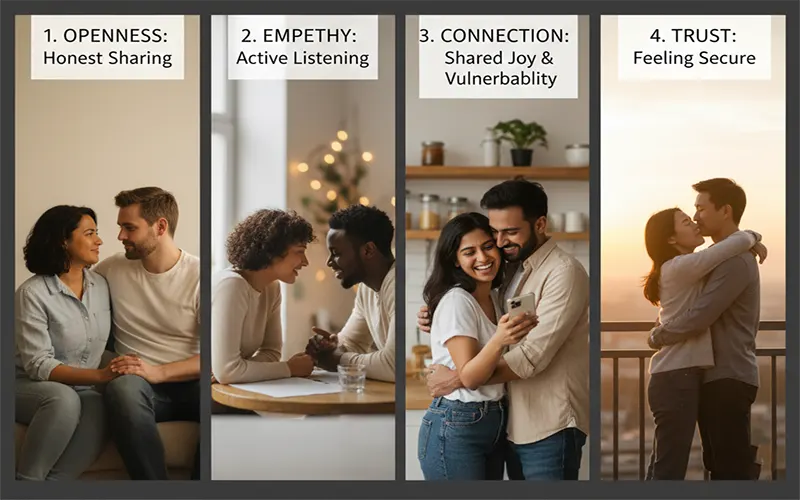
In the modern dating landscape, we are often taught to look for “red flags”—the warning signs of toxicity, narcissism, or manipulation. However, as relationship psychology evolves in 2026, experts are shifting the focus toward “green flags,” specifically the hallmark of Emotional Availability (EA).
True emotional availability is the psychological capacity to sustain an authentic, vulnerable connection while remaining regulated and accountable. It is the antithesis of the “situationship.” While chemistry might draw two people together, it is emotional availability that determines if they can actually build a life.
1. Defining the Construct: Chemistry vs. Consistency
It is a common psychological trap to mistake “intensity” for “intimacy.” High-intensity sparks often stem from the “anxious-avoidant trap,” where the uncertainty of a partner’s feelings triggers a dopamine rush.
- Chemistry: Often characterized by “butterflies,” which are biologically indistinguishable from a mild fear response.
- Emotional Availability: Characterized by Adult Sensitivity. This is the ability to stay present during emotional discomfort, to hear a partner’s needs without becoming defensive, and to maintain a steady, predictable presence.
2. The Somatic Marker: How Your Nervous System Responds
In 2026, we understand that the body often knows a partner’s emotional availability before the mind does. This is known as the Somatic Marker Hypothesis.
- The Threat Response: When you are with someone emotionally unavailable, your nervous system remains in “hyper-vigilance.” You may feel a “tightness” in your chest, an inability to eat, or a constant need to check your phone.
- The Security Response: When you are with someone emotionally available, your parasympathetic nervous system (rest and digest) remains active. You feel a sense of “calm curiosity.” You don’t feel the need to “perform” or manage their emotions to keep the peace.
3. Key Psychological Indicators of Availability
I. Accountability for the Past
Pay close attention to how a new partner speaks about their previous relationships.
- The Sign: An emotionally available person can describe their past with a “balanced narrative.” They acknowledge their own role in the breakdown of a relationship and speak of their ex-partners with a level of human complexity rather than painting them as a one-dimensional “villain.”
- Why it matters: If everyone in their past was “crazy,” it suggests a lack of self-reflection and an inability to take responsibility for emotional outcomes.
II. Consistency over Intensity (The Anti-Love Bomb)
Emotional availability is a “slow burn.” It values the steady accumulation of trust over the rapid-fire intensity of “Love Bombing.”
- The Sign: They follow through on small promises. If they say they will call at 7:00 PM, they do. They don’t disappear for three days and then return with grand romantic gestures.
- Why it matters: Consistency is the only way to build a Secure Attachment. Love bombers use intensity to bypass the natural stages of getting to know someone; the emotionally available person respects the pace of real life.
III. Repair over Avoidance
The first minor disagreement is the ultimate “stress test” for a new relationship.
- The Sign: After a conflict, do they shut down (The Silent Treatment) or do they engage in Active Repair? An emotionally available partner will circle back to a difficult conversation once they are regulated, saying, “I felt a bit overwhelmed earlier, but I want to understand your point of view.”
- Why it matters: Conflict is inevitable. The ability to “repair” is the number one predictor of long-term relationship success.
IV. Vulnerability Reciprocity
There is a difference between “emotional dumping” and “vulnerability.”
- The Sign: They share their feelings in “layers.” As you share a piece of yourself, they share a piece of themselves in return. They don’t flood you with their deepest traumas on the first date, nor do they stay “surface-level” for months.
- Why it matters: Healthy vulnerability is a dance of mutual risk.
4. Love Bombing vs. Genuine Availability
| Feature | Love Bombing (Unhealthy) | Genuine Availability (Healthy) |
| Pace | Extremely fast; “soulmate” talk in week one. | Measured; focused on getting to know you. |
| Boundaries | They feel like a rejection; they try to bypass them. | They are respected and even encouraged. |
| Past Relationships | “My ex was a monster; I’m the victim.” | “It was a difficult match; I learned X about myself.” |
| Conflict | Sudden coldness or extreme guilt-tripping. | Calm discussion and a focus on resolution. |
5. Communication Scripts: The Sound of Availability
An emotionally available person uses language that centers clarity and responsibility.
- On setting boundaries: “I’m really enjoying our time together, but I have a busy work week ahead. I won’t be as available to text during the day, but I’d love to see you on Friday.”
- On expressing needs: “I felt a little disconnected when we didn’t talk yesterday. Could we try to check in briefly even when we’re busy?”
- On owning mistakes: “I realize I was a bit sharp in my tone earlier. I was stressed from work, but that’s not an excuse. I’m sorry.”
6. The “Integration” Test
Emotionally available people do not compartmentalize. They are willing to integrate you into their “real world.”
- The Indicator: Within a reasonable timeframe (usually 2-4 months), they introduce you to friends, mention you to family, and include you in their hobbies.
- The Red Flag: If you feel like a “secret” or if their life seems entirely separate from the time they spend with you, they are likely emotionally unavailable or “bracketed” in their feelings.
The Peace of the Secure Base
In the end, the most profound sign of emotional availability is peace. When you are with someone who is truly available, the “guesswork” disappears. You aren’t constantly analyzing their texts or wondering where you stand.
In 2026, we are realizing that the “boring” feeling of a secure relationship is actually the sound of a regulated nervous system. Emotional availability isn’t a destination; it’s a daily practice of showing up, being seen, and staying present even when things get difficult.